I Opened My Grumpy Hive With a Torn Suit… Then Found THIS 😬🐝
I Opened My Grumpy Hive With a Torn Suit… Then Found THIS
Some inspections start with confidence.
This one started with a problem.
A tear in the bee suit. Right under the arm. And the hive I was about to open? The one that’s always a little more… alert than the others.
Not ideal timing.
But sometimes you just get on with it and see what the hive has to say.
Watch This POV Hive Inspection
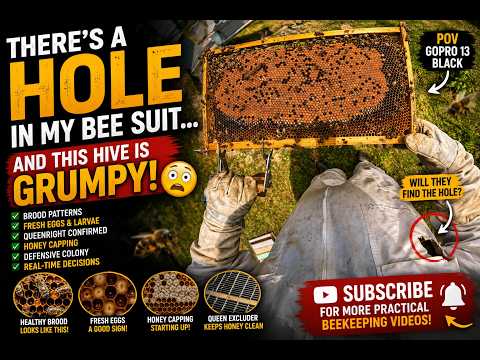
See this video about POV hive inspections and reading brood patterns
For more content beyond beekeeping:
https://linktr.ee/thelongwayforward
Why This Hive Has a Reputation
Every beekeeper has one.
The hive that keeps you on your toes.
Not necessarily aggressive, but definitely more reactive, more alert, and quicker to respond to disturbance.
This is that hive.
When Conditions Add Pressure
Normally, you rely on your gear to give you confidence.
With a tear in the suit, that confidence changes.
You move slower. You think more carefully. You pay closer attention to every movement and every reaction from the bees.
It sharpens the whole inspection.
Why POV Filming Changes Everything
This footage is filmed exactly as it happens.
No distance. No safe angle.
You see what the beekeeper sees and hear the hive as it responds.
That makes it easier to understand real hive behaviour rather than a filtered version of it.
What You Really Want to Find
In any inspection, there are a few key confirmations.
- Fresh eggs
- Young larvae
- A consistent brood pattern
If those are present, the hive is functioning.
You may not see the queen, but you know she is there.
The Moment That Changes the Inspection
Then it shows up.
Fresh eggs.
Larvae at the right stage.
And a strong, even brood pattern.
That is the confirmation you are looking for.
The hive is queenright and building properly.
Why Brood Tells the Truth
Beekeepers often focus on spotting the queen.
In reality, brood is more reliable.
Eggs and larvae tell you what has happened in the last few days.
That information matters more than a quick visual of the queen herself.
Some of my other posts you might like
- When did people first start keeping bees
- Why people become beekeepers and what draws them in
- Why climate matters and why I care about it
- What is a nucleus hive beginner guide
- Long Langstroth hive explained and why it works
Honey Progress and What It Means
Beyond brood, the next indicator is honey flow.
Frames are starting to cap.
Weight is building.
This is a sign that conditions are working and the colony is using them properly.
Not explosive growth, but steady and healthy progress.
Why a Queen Excluder Is Used
Keeping brood out of the honey super simplifies everything later.
A queen excluder allows workers to move through while keeping the queen below.
This helps maintain cleaner honey frames when it comes time to harvest.
Beekeeping in a Cooler Microclimate
Conditions here are slightly different.
Seasons run behind the city.
Summers arrive later.
Winters come earlier.
This shifts everything, including swarm timing and honey flow.
Inspections need to be based on what the hive is doing, not what the calendar suggests.
Why Calm Movement Still Wins
Even with a more reactive hive, calm movement makes a difference.
Fast actions create tension.
Slow, steady handling keeps things under control.
This becomes even more important when your gear is not perfect.
What This Inspection Shows
This hive might be a bit grumpy.
But it is strong.
The queen is laying.
Brood is healthy.
Honey is building.
That is exactly what you want to see.
Final Thoughts
Not every inspection starts comfortably.
Sometimes you go in with a disadvantage.
But if you stay calm and read the hive properly, you still get the answers you need.
This one could have been messy.
Instead, it turned into a clear reminder of what matters most inside a hive.
And yes… I kept my arm intact.
If you’re new to beekeeping, this is one of those moments that shows it’s not always about perfect conditions. Sometimes you’re working with less than ideal gear, a more reactive hive, and a bit of uncertainty. That’s where the real learning starts.
That’s what makes this Blogspot site so useful for beginners. It gives you a look at what inspections are actually like when things aren’t perfectly controlled. You start to see how to stay calm, focus on the key signs like brood and stores, and make decisions based on what matters rather than everything going smoothly.
Over time, you realise that confidence in beekeeping comes from handling situations like this, not avoiding them. You learn to trust what you’re seeing and adjust your approach as needed. Being able to revisit examples like this helps build that confidence much faster.
If you’re just starting out and want to understand how to handle reactive hives and read what’s happening inside properly, this beekeeping problems beginners often face guide is a great place to begin.
If you're interested in improving how you stay composed and make decisions under pressure, you can also check out my leadership and resilience podcast.


Comments
Post a Comment