This Long Hive Started Acting Different… So I Took a Closer Look 🐝
This Long Hive Started Acting Different… So I Took a Closer Look
Some hives just feel different.
Not necessarily bad. Not obviously good. Just… different.
That’s usually enough reason to open them up and see what’s really going on inside.
This one has become one of my favourite hives to work with, but it hasn’t always been that way.
Watch This Long Langstroth Inspection
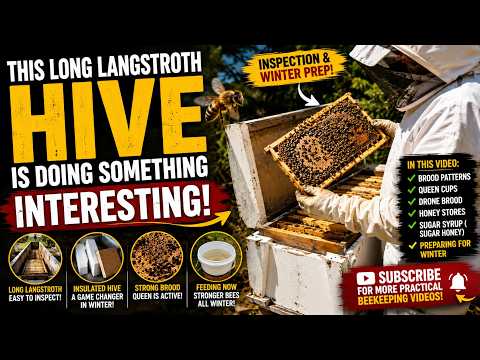
See this video about inspecting a long Langstroth hive and reading hive behaviour
For more content beyond beekeeping:
https://linktr.ee/thelongwayforward
Why Long Langstroth Hives Feel Different
This setup changes how you work with bees.
Instead of lifting stacked boxes, everything runs horizontally. Frames sit side by side, making inspections smoother and less physically demanding.
It creates a more controlled, relaxed way to move through the hive.
This Hive Didn’t Always Perform Well
When this hive was first set up, it struggled.
Just a basic pine box, minimal insulation, and the colony never really built momentum.
Once insulation was added and airflow improved, everything changed.
Stronger population. Better honey build. More consistent performance.
Why Insulation Matters More Than You Think
In a cooler climate, insulation is not optional.
It helps stabilise temperature inside the hive, reducing the effort bees need to maintain brood conditions.
That saved energy goes back into building the colony.
The result is a stronger hive over time.
What You Look For in an Inspection
Every inspection comes back to a few key checks.
- Honey production and storage
- Brood pattern and queen activity
- Signs of swarm preparation
- Overall hive behaviour
- Resource levels heading into cooler conditions
These indicators tell the full story of what is happening inside.
Feeding and Building Stores
This hive is currently being supported with syrup feeding.
A 1:1 mix is used to help the bees build stores.
Over time, this becomes stored reserves that support the colony when natural nectar flow slows down.
For many backyard beekeepers, this is a practical way to strengthen hives heading into winter.
Reading Brood and Hive Health
The brood pattern is one of the most important signs.
Consistent, healthy brood shows that the queen is laying well and the colony is balanced.
Drone cells, larvae, and developing brood all give clues about the hive’s condition.
Some of my other posts you might like
- How much honey you can get from one hive
- The effects of extreme weather across Australia
- Solar energy systems benefits and limitations
- How offshore wind turbines generate power
- Concentrated solar thermal energy explained
- Small scale wind energy pros and cons
Spotting Swarm Indicators Early
Queen cups and early signs of swarm preparation are always worth watching.
They do not always mean immediate action is needed.
But they do show what the hive might be planning.
Recognising these signals early helps you stay ahead of changes.
Why Regular Inspections Matter
Hives change quickly.
What looks stable one week can shift the next.
Regular inspections are not about interfering. They are about understanding.
The more you understand, the better your decisions become.
Preparing for Cooler Conditions
This stage is not just about current performance.
It is about what comes next.
Building stores, maintaining strength, and reducing stress all contribute to how well the hive moves through colder months.
What This Hive Is Showing
This colony is stable.
It is building stores.
The queen is active.
And the structure of the hive is supporting that growth.
That is exactly what you want to see.
Final Thoughts
Sometimes a hive does not need fixing.
It just needs understanding.
This one started as a struggling setup and has turned into one of the most reliable hives in the apiary.
And that comes down to small changes made at the right time.
That is what makes beekeeping so rewarding.
If you’re new to beekeeping, this is one of those situations that teaches you to trust your instincts a bit more. When a hive feels different, even if you can’t immediately explain why, it’s usually worth taking a closer look. That awareness is something that builds over time.
That’s what makes this Blogspot site so useful for beginners. It shows how to connect those small changes in behaviour with what’s actually happening inside the hive. You start to understand that inspections aren’t just routine, they’re about reading the colony and responding to what you find.
Over time, you realise that even small adjustments, like improving insulation or airflow, can completely change how a hive performs. Being able to revisit examples like this helps you see how those decisions play out and builds confidence in making your own.
If you’re just starting out and want to understand how to approach hive checks and read changes in behaviour, this how to inspect a beehive for beginners guide is a great place to begin.
If you're interested in improving how you observe, think, and make decisions over time, you can also check out my self improvement and leadership podcast.


Comments
Post a Comment