My Baby Hive Is Waking Up… But Did the New Queen Survive? 🐝👑
My Baby Hive Is Waking Up… But Did the New Queen Survive?
This is one of the most important stages in a hive’s life.
Everything up to this point has been preparation. The split, the move, the waiting. Now it all comes down to one question.
Did the new queen make it?
And as tempting as it is to check… this is where patience matters most.
Watch This Baby Hive Update
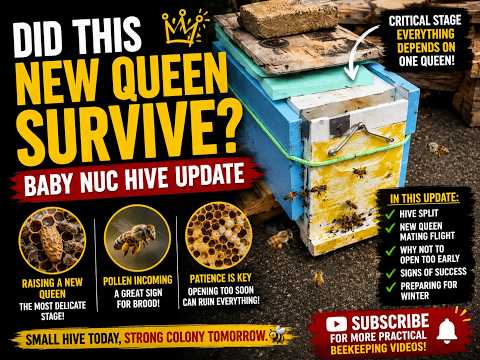
See this video about checking a nucleus hive after a queen has emerged
For more content beyond beekeeping:
https://linktr.ee/thelongwayforward
How This Baby Hive Started
This colony began as a split.
Frames of brood, bees, and resources were moved from a strong hive into a smaller nucleus hive.
The goal was twofold. Reduce swarm pressure in the original hive and give this new colony a chance to grow.
From that point on, everything depended on the bees raising a new queen.
Why This Stage Is So Delicate
A newly emerged queen is vulnerable.
She needs time to mature, orient herself, and complete mating flights.
Only after that will she begin laying eggs.
Until then, the future of the hive is uncertain.
The Risk of Opening Too Early
This is where patience becomes critical.
Opening the hive too soon can disrupt the queen or even damage her.
At this stage, one small mistake can undo weeks of progress.
That is why the hive stays closed for now.
What You Can Learn From the Entrance
Even without opening the hive, there are signs to watch for.
Worker bees returning with pollen is one of the best indicators.
Pollen suggests the colony is preparing for brood or already supporting early development.
It is a small but encouraging sign.
What Happens Next Inside the Hive
If everything goes well, the queen will begin laying soon.
That leads to:
- Fresh eggs appearing in cells
- Larvae developing over the following days
- A consistent brood pattern forming
This is the point where the colony starts to stabilise and grow.
Why Timing Matters So Much
Beekeeping is not just about what you do.
It is about when you do it.
Inspect too early and you risk disruption.
Wait too long and you may miss a problem.
Finding that balance is part of the learning process.
The Plan Moving Forward
The next step is simple.
Wait another week or two.
Then open the hive and check for:
- Eggs
- Larvae
- A healthy brood pattern
Those signs will confirm whether the queen has successfully established herself.
From Nucleus Hive to Full Colony
If the queen is laying well, this small hive will begin to expand quickly.
Over time, it can be transferred into a larger hive and built up into a full colony.
That is the long term goal.
Why These Moments Matter
This stage is quiet, but important.
It is where patience replaces action.
Where observation replaces intervention.
And where a small colony begins the process of becoming something much bigger.
Final Thoughts
Right now, everything looks promising.
The bees are active.
Pollen is coming in.
The hive feels stable.
But the real confirmation is still to come.
For now, the best thing to do is wait… and let the bees do what they do best.
If you’re new to beekeeping, this is one of those stages that really tests your patience. You’ve done the work, made the split, and now everything depends on something you can’t see yet. It’s tempting to open the hive and check, but learning to hold back is part of the process.
That’s what makes this Blogspot site so helpful for beginners. It shows that not every step in beekeeping is hands on. Sometimes the best move is to observe from the outside and trust what the bees are doing. Seeing examples like this helps you understand when to step in and when to give the hive space.
Over time, you start to recognise these quiet stages as some of the most important. It’s where colonies stabilise, queens establish, and things begin to come together behind the scenes. Being able to revisit moments like this helps build confidence so you’re not rushing decisions too early.
If you’re just starting out and want to understand how to approach inspections at the right time, this when to inspect your beehive and what to look for guide is a great place to begin.
If you're interested in building patience and improving your long term thinking, you can also check out my motivation and self improvement podcast.


Comments
Post a Comment