I Tried to Feed This Hive… They Had Other Ideas 😅🐝
I Tried to Feed This Hive… They Had Other Ideas
On paper, this was meant to be simple.
Lift the lid. Top up the feeder. Close it back up.
Easy job.
But the bees clearly had a different plan.
From the moment the lid came off, they were right there. Curious, alert, and just a little bit grumpy about the whole situation.
Watch This POV Hive Feeding
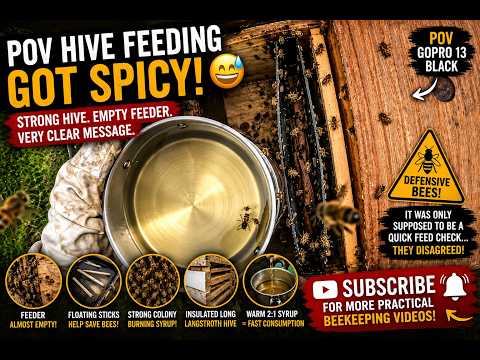
See this video about feeding a hive and working through defensive bee behaviour
For more content beyond beekeeping:
https://linktr.ee/thelongwayforward
Why Feeding Matters at This Stage
Feeding is not always about boosting production.
Sometimes it is about helping a hive build enough reserves to get through tougher conditions ahead.
In this case, the goal is simple. Build stores before winter and give the colony a buffer when natural flow slows down.
The Setup Is Simple
This is not a complicated system.
A feeding frame sits inside the hive and is filled with sugar syrup.
The mix here is a 2:1 ratio, which is thicker and more suited to building stores rather than stimulating brood.
Warming the syrup slightly helps the bees take it more easily, especially in cooler conditions.
Why Floating Material Matters
One small detail makes a big difference.
Adding sticks or natural material inside the feeder gives bees something to grip.
Without it, bees can fall into the syrup and struggle to climb out.
It is a simple fix that prevents unnecessary losses.
How Fast Bees Can Consume Feed
Strong hives do not take long to work through syrup.
In some cases, they can empty a feeder in just a few days.
This is a sign of demand. The colony is actively storing and preparing.
It also means feeding needs to be monitored and topped up at the right time.
Why This Hive Felt Different
Not every feeding session is calm.
Some days, the bees are more alert.
They come out faster, fly closer, and make their presence known.
This hive was definitely in that mood.
Curious vs Defensive Behaviour
There is a difference between bees being curious and bees being aggressive.
Curious bees will hover, inspect, and bump lightly.
Defensive bees move with intent. Faster, sharper, and more persistent.
This hive sat somewhere in between.
Not out of control, but definitely not relaxed.
Why POV Filming Shows the Real Experience
This footage is captured exactly as it happens.
No angles. No distance. No filtering.
You see what the beekeeper sees.
You hear what the hive sounds like in real time.
That makes it easier to understand behaviour and reaction.
Working Calmly Still Matters
When bees are more active, the temptation is to rush.
That usually makes things worse.
Slower movement, steady handling, and finishing the job without overreacting keeps things manageable.
Even when the hive feels “spicy”.
Why Insulation Still Plays a Role
This hive is also insulated.
Not to warm it directly, but to help it maintain stable internal conditions.
Less temperature fluctuation means less energy spent regulating and more energy available for storing food.
What This Feeding Session Shows
Even simple jobs can change quickly.
A calm plan can turn into a more intense moment the second the lid lifts.
That is part of working with bees.
You adapt, stay steady, and finish what you came to do.
Final Thoughts
This was meant to be quick.
It was not.
But it was real.
And that is the part of beekeeping that teaches you the most.
Not when everything goes perfectly, but when the bees remind you that you are working on their terms.
If you’re new to beekeeping, this is one of those moments that quickly teaches you that even the simplest jobs don’t always go to plan. You might expect a quick feed and close, but the hive can have a completely different mood on the day. Learning to handle that is part of the process.
That’s what makes this Blogspot site so useful for beginners. It shows those real, unplanned moments where you have to adjust on the fly. You start to understand how bee behaviour changes, how to read the difference between curious and defensive responses, and how to stay calm even when things feel a bit more intense than expected.
Over time, this is how confidence builds. You realise it’s not about everything going smoothly, it’s about how you respond when it doesn’t. Being able to come back and watch situations like this again helps you prepare for those moments before they happen in your own hive.
If you’re just starting out and want to understand how to handle situations like defensive behaviour and feeding challenges, this common issues in beekeeping and how to manage them guide is a great place to begin.
If you're interested in improving how you stay calm and make decisions under pressure, you can also check out my motivation and leadership podcast.


Comments
Post a Comment