How to Inspect Multiple Beehives and Spot Problems Early
How to Inspect Multiple Beehives and Spot Problems Early
Inspecting multiple hives in one session teaches you something a single hive often cannot.
Comparison.
When you move through several colonies back to back, patterns start to become obvious. Some hives feel strong and productive. Others feel slower, lighter or under pressure.
If you are starting to learn beekeeping, understanding how to compare hives is one of the fastest ways to build confidence around inspections and colony management.
This inspection session focuses on several key areas:
- Checking honey stores
- Monitoring brood health
- Watching for pests and pressure
- Finding resources for a weak nuc hive
- Looking for queen cups and queen cells
Why Inspecting Multiple Hives Helps You Learn Faster
One hive can give you useful information.
Several hives in a row give you context.
That context helps you notice:
- Differences in brood patterns
- Changes in colony behaviour
- Variation in honey stores
- Signs of strong or weak hive performance
The more comparisons you make, the faster your instincts begin developing.
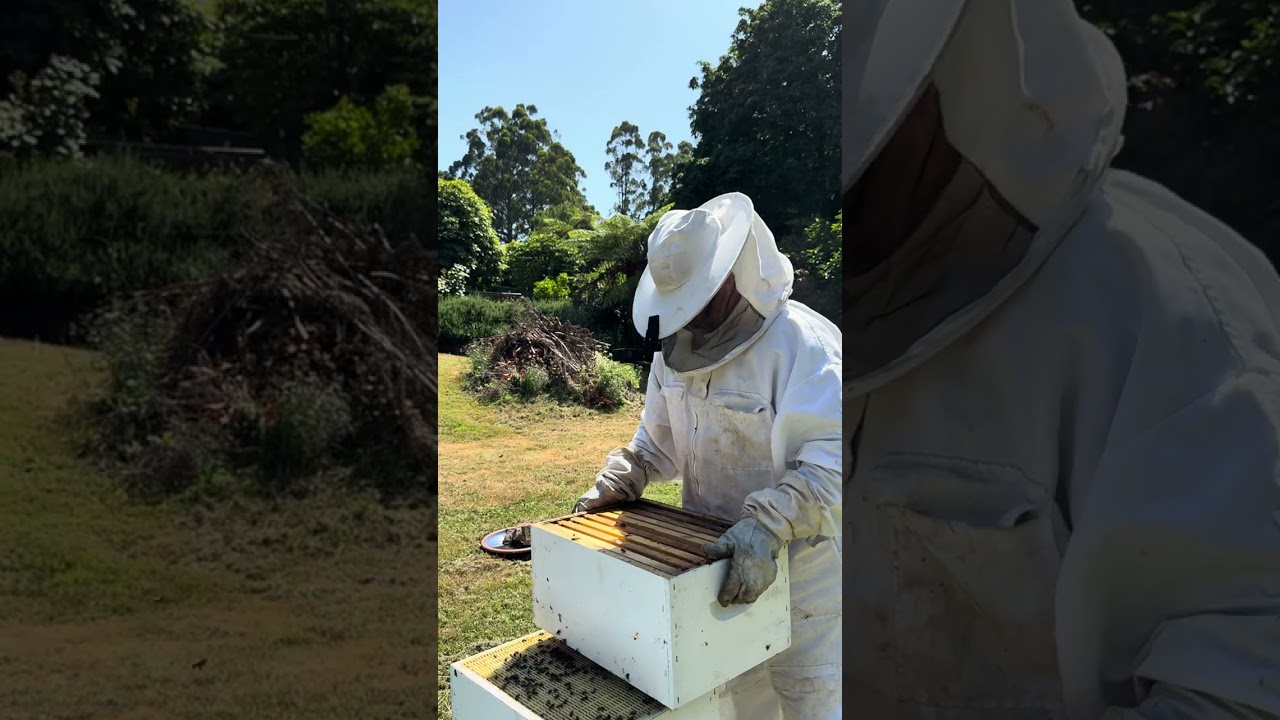
How to Check Honey Stores During an Inspection
One of the first things to assess is food availability inside the hive.
Frames can tell you a lot very quickly.
Heavy frames often indicate:
- Stored honey
- Good nectar flow
- A productive colony
Light frames may suggest:
- Low food reserves
- A weaker colony
- The need for support feeding
Over time, experienced beekeepers develop a feel for this simply by lifting and handling frames.
What Brood Patterns Tell You
Brood is one of the clearest indicators of colony health.
During inspections, useful things to look for include:
- Fresh eggs
- Young larvae
- Consistent brood coverage
- Even brood patterns
Healthy brood generally suggests the queen is laying well and the colony is functioning properly.
Irregular or patchy brood may point toward stress, disease, queen problems or colony weakness.
This part of backyard beekeeping becomes much easier once you have seen multiple hives side by side.
Watching for Pests and Pressure
Strong colonies usually cope with pressure better than weak ones.
During inspections, it is important to watch for:
- Wasp activity
- Defensive behaviour
- Signs of stress
- Hive population changes
- General colony condition
Small warning signs often appear long before a hive fully declines.
Catching those early makes management decisions much easier.
Why Queen Cups and Queen Cells Matter
Queen cups are often one of the first indicators that the colony may be preparing for change.
An empty queen cup is not necessarily a problem.
But active queen cells usually require attention.
Queen cells may be used to:
- Replace a failing queen
- Prepare for swarming
- Create splits
- Support weaker hives
Understanding the difference between queen cups and active queen cells is an important part of practical hive inspections.
Using Strong Colonies to Support Weak Ones
One goal of this inspection session was finding suitable frames to support a weak nuc hive.
The most useful donor frames usually contain:
- Fresh eggs
- Young larvae
- Healthy brood coverage
- Nurse bees
These resources can help weak colonies:
- Raise a queen
- Build population
- Recover from stress
- Stabilise more quickly
This is one of the advantages of managing multiple hives. Strong colonies can sometimes support weaker ones before problems become too severe.
Why Hive Insulation Can Help
Another part of these inspections involved hive insulation using simple EPS board.
Insulation can help:
- Reduce temperature swings
- Maintain brood warmth
- Lower colony stress
- Improve hive stability
In cooler or highly variable climates, insulation can make inspections and brood management more consistent.
What Hive Sound Can Tell You
Hive sound is often overlooked by beginners, but it can reveal a surprising amount.
A calm, productive colony often produces:
- A steady hum
- Consistent background buzzing
- Stable hive noise
A stressed or agitated hive may sound:
- Sharper
- Louder
- More reactive
Listening carefully becomes another useful inspection tool over time.
Watch All Four Hive Inspections
This inspection session shows how comparing several hives helps identify colony strength, honey production, brood health, pest pressure and resources that can be used to support weaker hives.
Why Comparison Improves Decision Making
One hive by itself can sometimes be difficult to judge accurately.
But when you compare several colonies together, important patterns become easier to recognise.
Understanding how to make honey eventually becomes less about individual inspections and more about understanding trends across your apiary.
This is where practical decision making starts improving quickly.
Frequently Asked Questions About Hive Inspections
What should you check during a hive inspection?
Check brood patterns, honey stores, hive population, queen activity, pests and signs of swarm preparation.
Why inspect multiple hives in one session?
Inspecting multiple hives allows you to compare colony strength, brood health and food stores more effectively.
How do you know if a hive has enough honey?
Heavy frames usually indicate strong honey stores, while light frames may suggest the colony needs support.
What do queen cups mean?
Queen cups may indicate the colony is considering raising a queen, but empty cups alone do not always mean swarming.
Why are brood patterns important?
Healthy brood patterns show the colony is stable and the queen is laying consistently.
Can strong hives help weak colonies?
Yes, strong colonies can sometimes provide brood frames, nurse bees or resources to help weaker hives recover.
What does hive sound tell you?
A steady hum usually suggests a calm colony, while sharper or louder sounds may indicate stress or agitation.
Final Thoughts
Inspecting multiple hives in one session gives you much more than information.
It gives you comparison, context and perspective.
Over time, that is what builds confidence around hive management and decision making.
If you want a simple place to get your bearings and build confidence step by step, this beginner beekeeping guide to getting started is a great place to start.


Comments
Post a Comment