I Moved My Hive… and the Bees Came Back to Nothing 😳🐝
I Moved My Hive… and the Bees Came Back to Nothing 😳🐝
Moving a hive sounds simple.
But what happens after… is where it gets interesting.
This hive had been under heavy pressure.
Robbing. Stress. Too much attention from the wrong bees.
So I made the call to move it.
Watch What Happens After a Hive Move
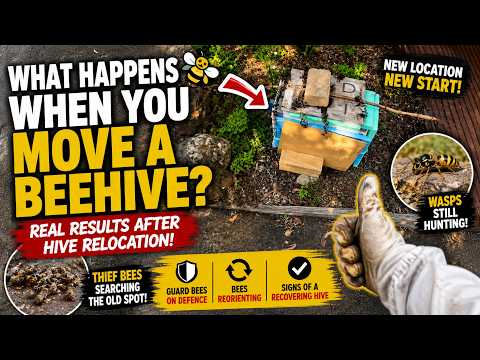
See this video about what happens when you move a hive and how bees react
For more content beyond beekeeping:
https://linktr.ee/thelongwayforward
Why I Moved This Hive
This colony was being robbed heavily.
Other bees had worked out it was vulnerable.
Once that starts, it doesn’t stop on its own.
So relocation became the best option.
What Happens to Returning Bees
Bees don’t instantly know the hive has moved.
Foragers return to the last known location.
And when they arrive…
There is nothing there.
That moment is always fascinating to watch.
The Confusion at the Old Location
You’ll see bees circling.
Searching.
Trying to work out what changed.
This is normal.
They are relying on memory, and it takes time to adjust.
What Happens at the New Hive
At the new location, it’s a different story.
Guard bees are active.
The entrance is defended.
The colony is resetting.
And slowly, things start to stabilise.
Why Wasps Still Show Up
Wasps don’t forget easily.
They continue to search for food sources.
Even after the hive is gone, they keep checking.
That pressure can linger for a while.
The Simple Reorientation Trick
One small step makes a big difference.
Adding foliage at the entrance.
This forces bees to stop and reassess when they leave the hive.
It helps them remap their surroundings.
And reduces the number returning to the old location.
Some of my other posts you might like
- Four hive inspections in one day what I found
- How to light a beekeeping smoker so it stays lit
- Can a struggling nuc raise a new queen
- How far you really need to move a beehive
- Day one of a new hive and its chance to survive
Why Reorientation Matters
Without it, many bees will drift back to where the hive used to be.
That weakens the colony.
With it, they adapt much faster.
What This Means for the Hive
Relocation doesn’t fix everything instantly.
But it removes pressure.
It gives the colony space to recover.
And sometimes, that’s all they need.
Final Thoughts
This is real beekeeping.
No perfect timing. No perfect outcomes.
Just decisions, observations, and learning what works.
Move the hive.
Watch what happens.
And adjust from there.
If you’re new to beekeeping, this is one of those moments that can catch you off guard. You move a hive thinking you’ve solved the problem, and then suddenly bees are returning to where it used to be. It feels strange the first time you see it, but it’s actually a really important part of how bees navigate.
That’s what makes this Blogspot site so helpful for beginners. It shows what actually happens after decisions like this, not just the decision itself. You start to understand how bees orient, how they respond to change, and why small steps like helping them reset their location can make a big difference.
Over time, you realise that beekeeping is as much about understanding behaviour as it is about managing the hive. Watching how bees react in situations like this helps you build that awareness, so you can make better decisions the next time something similar happens.
If you’re just starting out and want to understand how to manage hive movements and what to look for during follow up checks, this how to inspect a hive after moving it guide is a great place to begin.
If you're interested in improving how you adapt and respond to changing situations, you can also check out my leadership and adaptability podcast.


Comments
Post a Comment