This Hive Was NOT Happy With Me… But What I Found Matters 😅🐝
This Hive Was NOT Happy With Me… But What I Found Matters
You know within seconds how an inspection is going to go.
This one didn’t take long.
A couple of guard bees straight to the face, persistent, focused, and very clear about one thing.
I’d pushed my luck for the day.
Fair enough… I had already been through a few hives that morning.
Watch This POV Hive Inspection
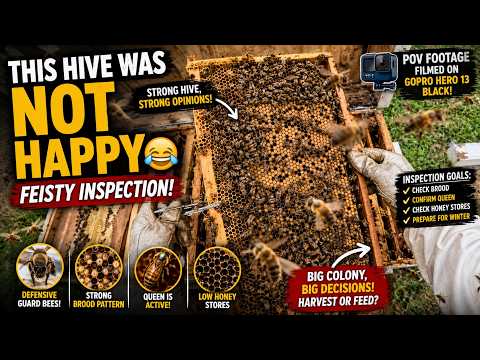
See this video about handling a defensive hive and checking brood and honey levels
For more content beyond beekeeping:
https://linktr.ee/thelongwayforward
Why This Hive Was On Edge
Timing matters.
This was the third hive of the morning, and bees notice disruption.
Guard bees were already alert, and this colony made it clear it was paying attention from the start.
Not aggressive, but definitely not relaxed.
The Purpose of This Inspection
This hive has recently given up brood and honey to support a new nucleus colony.
That kind of split changes the internal balance.
The goal here is to confirm the hive has recovered and is still performing well.
The Key Checks Every Time
There are a few non negotiables in any inspection.
- Is the queen present and laying
- Is the brood pattern consistent
- Are honey stores building
- Is the colony balanced and stable
These answers guide everything that comes next.
Reading the Brood Pattern
This is where the hive tells the truth.
Strong brood. Consistent pattern. Clear development across frames.
That confirms the queen is active and the colony is functioning properly.
Exactly what you want to see.
When Honey Does Not Match Brood Strength
This is the interesting part.
There is plenty of brood.
But honey stores are lower than expected.
This imbalance matters.
Why This Changes the Plan
When stores are light, priorities shift.
Instead of harvesting, the focus becomes building reserves.
Leaving honey in the hive often leads to stronger colonies later.
Especially heading into cooler months.
Why Feeding May Be Needed
If natural nectar flow does not recover, feeding becomes an option.
Not as a replacement for honey, but as support.
The goal is always survival first, production second.
Handling a Defensive Hive
This hive required a steady approach.
Guard bees stayed close, checking every movement.
Slower handling, consistent smoke, and staying calm kept the inspection manageable.
Rushing would have made it worse.
Equipment That Makes a Difference
Small choices matter over time.
Metal queen excluders tend to be smoother and easier on bees compared to plastic.
And for filming, the GoPro setup allows hands free work while capturing everything clearly.
That makes a big difference in real inspections.
What This Hive Is Showing
The colony is strong.
The queen is laying.
Brood is healthy.
But food reserves need attention.
That is the key takeaway.
Final Thoughts
Not every hive greets you calmly.
And not every inspection gives perfect results.
This one gave something better.
A clear direction.
Build stores. Support the hive. Keep it strong.
And maybe next time… arrive a little earlier in the rotation.
If you’re new to beekeeping, this is one of those inspections that teaches you a lot very quickly. Not every hive is calm, and not every visit goes smoothly. Learning how to stay steady when the bees are a bit more alert is a big part of building confidence.
That’s what makes this Blogspot site so useful for beginners. It shows what real inspections feel like when conditions aren’t perfect. You get to see how to read the hive properly, focus on what matters, and work through the inspection without letting the situation get away from you.
Over time, you start to understand that behaviour, brood, and food stores all need to be looked at together. A hive can be strong in one area and still need support in another. Being able to revisit inspections like this helps you pick up on those patterns much faster.
If you’re just starting out and want to understand how to handle more reactive hives and read what’s happening inside, this beehive inspection tips for beginners guide is a great place to begin.
If you're interested in improving how you stay calm and make better decisions under pressure, you can also check out my leadership and mindset podcast.


Comments
Post a Comment