Why I Feed My Bees Before Winter… (Most People Get This Wrong) 🐝❄️
Why I Feed My Bees Before Winter… (Most People Get This Wrong)
Feeding bees can feel controversial.
Some beekeepers avoid it completely. Others rely on it every season.
For me, it comes down to one simple question.
Will this hive have enough food to survive what’s coming?
If the answer is uncertain, I step in early.
Watch This Backyard Apiary Walkaround
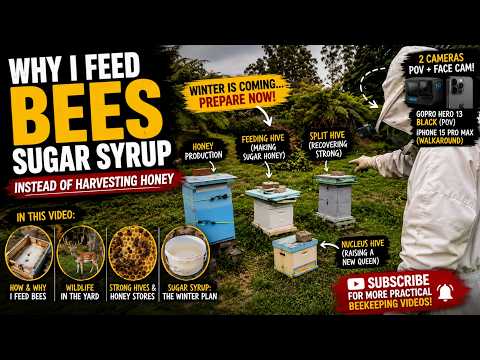
See this video about feeding bees before winter and managing a backyard apiary
For more content beyond beekeeping:
https://linktr.ee/thelongwayforward
Why Feeding Before Winter Matters
Winter changes everything for a hive.
Nectar flow slows or stops completely. Foraging becomes limited. The colony relies almost entirely on stored resources.
If those stores are not strong enough, survival becomes difficult.
Not Every Location Is the Same
Where you keep bees matters.
In cooler areas with shorter summers, colonies simply have less time to build honey reserves.
Even strong hives can fall short if conditions are not ideal.
That is where feeding becomes part of the strategy.
What Feeding Actually Does
Feeding is not about replacing honey.
It is about giving the bees enough energy to survive when natural resources are limited.
Sugar syrup is converted and stored by the bees, creating what many call “sugar honey”.
It is not harvested, it is left for the colony.
Different Hives, Different Roles
Not every hive is treated the same.
Some are focused on honey production.
Others are supported more heavily to ensure they can help the apiary as a whole.
This approach creates flexibility when conditions change.
The Role of a Nucleus Hive
You will also see a baby hive in this setup.
This small colony is still developing, raising a new queen and building strength.
It does not yet have the resources of a full hive, which makes support even more important.
Working With the Space You Have
Backyard beekeeping is about adapting.
Even in suburban environments, it is possible to maintain multiple hives with the right setup.
Natural surroundings, available space, and local conditions all play a role.
Unexpected Challenges in the Backyard
Beekeeping rarely exists in isolation.
Wildlife becomes part of the environment.
In this case, deer regularly pass through the yard, sometimes helping themselves to fruit trees.
It is all part of working within a natural space.
When to Step In and When to Hold Back
This is the balance every beekeeper learns.
Too much intervention can disrupt the hive.
Too little can leave the colony exposed.
Feeding is one of those decisions that needs to be made based on observation, not habit.
Why Feeding Early Makes a Difference
Waiting too long can create pressure.
Feeding earlier allows the bees to build stores gradually and naturally.
This reduces stress and gives the colony more time to stabilise before colder conditions arrive.
What This Apiary Setup Shows
Each hive has a purpose.
Each colony is at a different stage.
And each one requires slightly different management.
This is what real backyard beekeeping looks like.
Final Thoughts
Feeding is not about doing more.
It is about doing what is needed.
Some seasons require support. Others do not.
The key is understanding your hives and your environment.
Because when winter arrives, preparation is what makes the difference.
If you’re new to beekeeping, feeding can feel like one of those confusing topics where everyone seems to have a different opinion. Do you feed or not? When do you start? Seeing it applied in a real setup like this makes it much easier to understand what actually matters.
That’s what makes this Blogspot site so useful for beginners. It shows that decisions like feeding aren’t based on fixed rules, they’re based on what your hives actually need. You start to see how location, hive strength, and timing all come together to guide what you do.
Over time, you begin to think ahead instead of reacting late. You learn to prepare your hives before conditions turn, rather than trying to catch up once they’ve already started to struggle. Being able to revisit examples like this helps build that awareness and confidence step by step.
If you’re just starting out and want to understand how to time your inspections and make better decisions before winter, this beehive inspection timing and checklist guide is a great place to begin.
If you're interested in improving how you plan ahead and make smarter long term decisions, you can also check out my leadership and self improvement podcast.


Comments
Post a Comment