This Feisty Hive Didn’t Want Me There… But What I Found Inside Matters 🐝
This Feisty Hive Didn’t Want Me There… But What I Found Inside Matters
You can usually tell within seconds what kind of inspection it’s going to be.
This one made it clear early.
A couple of bees right up close, letting me know I wasn’t exactly welcome. Not aggressive, but definitely alert.
That usually means one thing. Pay attention.
Watch This Hive Inspection
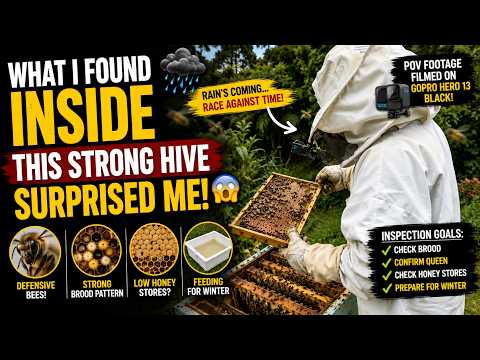
See this video about inspecting a defensive hive and checking brood and honey stores
For more content beyond beekeeping:
https://linktr.ee/thelongwayforward
Why This Hive Feels Different
Some colonies are naturally more reactive.
They respond faster to disturbance, move quicker across frames, and let you know they are paying attention.
This hive has always had that personality.
The Reason for This Inspection
Recently, frames of brood and honey were removed from this hive to create a new nucleus colony.
That changes the balance inside.
Less brood, fewer resources, and a temporary drop in strength.
This inspection is about confirming the hive has recovered properly.
What You Always Check First
Every inspection comes back to a few key indicators.
- Brood pattern and queen activity
- Honey stores and incoming nectar
- Overall colony behaviour
These tell you whether the hive is stable or needs support.
Reading the Brood Pattern
Brood tells the truth about the hive.
Fresh eggs and developing larvae confirm the queen is active.
A consistent pattern shows the colony is functioning well.
That is always the most important check.
How the Bees Respond During the Inspection
This hive stays alert the whole time.
Bees move quickly, stay close, and show more interest than a calmer colony.
It is not out of control, but it does require steady handling.
Smoke helps settle the hive and gives you time to work through frames properly.
What the Honey Stores Reveal
Here is where things get interesting.
There is brood. There is activity.
But honey stores are not as strong as expected.
This is a key detail.
Why Honey Levels Matter in This Climate
In cooler areas, bees have less time to build reserves.
That means every frame of stored honey matters.
If stores are not building as expected, it may need to be addressed early.
When Feeding Becomes Part of the Plan
This is where a decision starts to form.
If natural stores are not enough, feeding sugar syrup later in the season may be necessary.
Not to replace honey, but to support the colony through winter.
Balancing Intervention and Observation
Beekeeping is rarely about immediate action.
It is about reading the hive and planning ahead.
This inspection does not require a major change.
But it highlights something to monitor closely.
What This Hive Is Showing
The colony is healthy.
The queen is laying.
Brood is developing well.
But food reserves are not yet where they need to be.
That is the key takeaway.
Final Thoughts
Not every inspection reveals a problem.
Sometimes it reveals a direction.
This hive is strong, but it may need support later.
And knowing that now makes all the difference.
Because in beekeeping, small observations lead to better outcomes.
If you’re new to beekeeping, this is one of those inspections that really shows how important it is to read the full picture. A hive can be strong, active, and still have gaps that need attention. It’s not always about one big issue, it’s about noticing the smaller details early.
That’s what makes this Blogspot site so useful for beginners. It shows how behaviour, brood, and food stores all connect. You start to understand that a hive can be doing well in one area while needing support in another, and that’s where good decisions come from.
Over time, this is how your confidence builds. You stop looking for perfect hives and start looking for patterns. What’s strong, what’s not, and what might need attention next. Being able to revisit inspections like this helps you develop that awareness much faster.
If you’re just starting out and want to understand how to read your hive during inspections and pick up on early warning signs, this how to check your beehive during inspections guide is a great place to begin.
If you're interested in improving how you observe situations and make better decisions over time, you can also check out my leadership and personal growth podcast.


Comments
Post a Comment