Can a Weak Nuc Hive Raise a Queen From Eggs and Larvae?
Can a Weak Nuc Hive Raise a Queen From Eggs and Larvae?
One of the most important turning points in beekeeping happens when a struggling hive reaches the point where it either rebuilds or collapses.
At that stage, success often depends on timing, resources and whether the colony still has enough strength left to respond.
If you are beginning to learn beekeeping, understanding how weak nuc hives recover can help you recognise when intervention may still give the colony a chance.
This hive was under pressure from multiple problems at once, including low stores, wasp pressure and wax moth damage. The goal now was simple:
Create the conditions the colony needed to raise a new queen.
Why Weak Nuc Hives Struggle So Easily
Small colonies face problems that stronger hives can often absorb without major difficulty.
In this case, several issues combined together:
- Low bee numbers
- Limited food stores
- Wasp pressure
- Wax moth activity
- Reduced hive defence
Once a colony drops below a certain strength, recovery becomes much harder because the hive no longer has enough workers to defend itself properly while also raising brood.
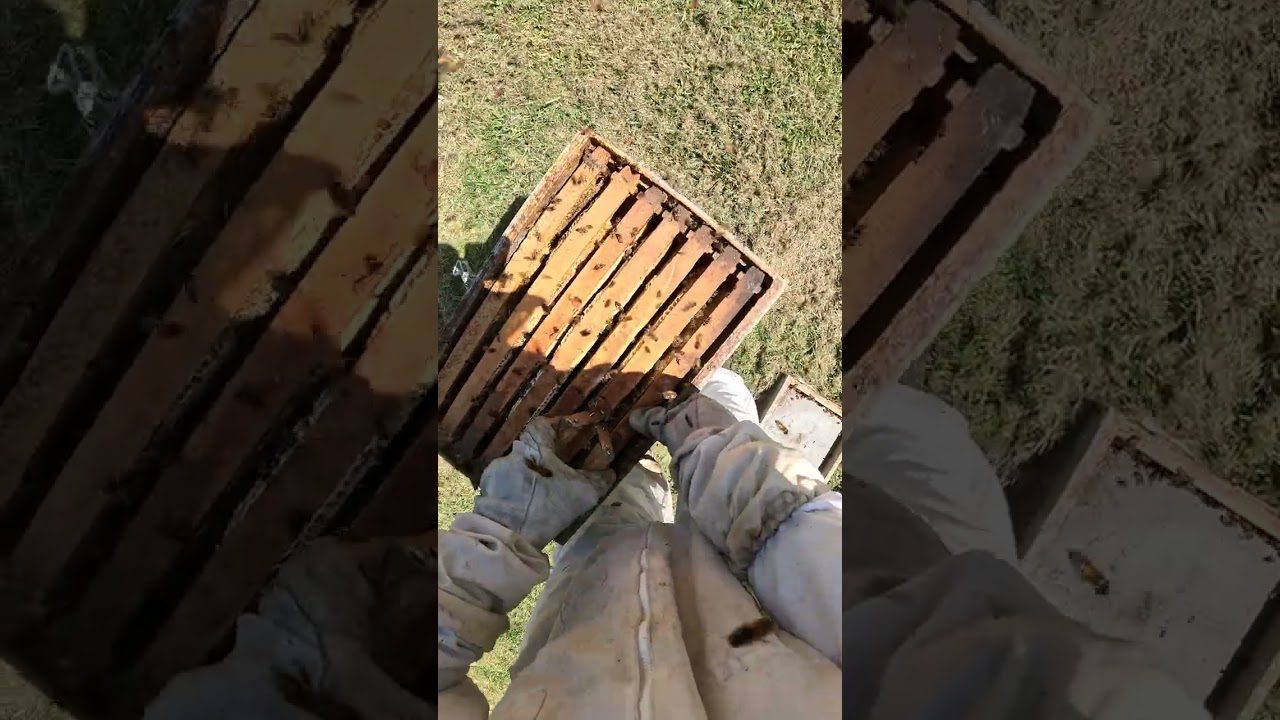
Why Eggs and Larvae Matter So Much
If a hive is queenless, the colony can only raise a new queen if suitable brood is available.
That means the bees need:
- Fresh eggs
- Very young larvae
- Nurse bees capable of caring for them
Without these, the hive has no realistic path to requeening itself naturally.
This is why adding the correct brood frame at the right time can completely change the future of a weak nuc.
Removing Wax Moth Damaged Frames
Before adding new brood resources, the damaged comb needed to be dealt with first.
Wax moth pressure is often a sign the colony has become too weak to protect unused comb properly.
Removing damaged frames helps:
- Improve hive hygiene
- Reduce pest pressure
- Create space for healthy brood
- Stabilise the colony environment
In some cases, wax moth affected frames can later be frozen to kill pests before being reused.
Selecting the Right Donor Frames
Not every brood frame is equally useful during a rescue.
The ideal donor frames contain:
- Freshly laid eggs
- Young larvae
- Strong brood coverage
- Attached nurse bees
Care also needs to be taken to avoid accidentally transferring the queen from the donor hive.
This part of backyard beekeeping becomes heavily focused on observation and careful handling.
Why Nurse Bees Make Recovery Possible
Nurse bees are critical in any weak hive rescue.
These younger bees:
- Feed larvae
- Maintain brood warmth
- Support queen cell development
- Help stabilise the colony internally
Without nurse bees, even healthy brood frames may fail because there are not enough workers to care for the developing brood properly.
Why Feeding Helps Weak Colonies Recover
A weak colony often does not have enough foraging strength to support itself immediately.
Sugar syrup feeding helps provide:
- Immediate energy
- Support for brood care
- Wax building resources
- Reduced pressure on the colony
Feeding is not about creating a perfect hive.
It is about helping the colony survive long enough to rebuild naturally.
Why Speed Matters During Rescue Work
Weak hives are vulnerable during inspections.
Leaving the hive open too long increases:
- Stress
- Heat loss
- Wasp exposure
- Disruption to brood care
That is why rescue inspections should stay efficient:
- Prepare frames before opening the hive
- Move deliberately
- Reduce unnecessary exposure time
- Close the hive promptly
Efficient handling can make a major difference for fragile colonies.
Watch This Nuc Hive Rescue Step by Step
This video shows the process of reinforcing a struggling nuc hive with fresh brood, eggs, larvae and nurse bees to create the conditions needed for the colony to potentially raise a new queen.
What Happens Next?
At this point, the colony now has:
- Fresh brood
- Nurse bees
- Improved food support
- A chance to raise a queen
The next inspections will reveal whether:
- Queen cells are created
- Brood continues developing
- The population stabilises
- The colony begins recovering
The outcome is still uncertain, but the hive now has a realistic opportunity to survive.
Why Recovery Situations Teach So Much
One of the most valuable parts of beekeeping is learning how colonies respond under pressure.
Understanding how to make honey eventually becomes about much more than harvesting honey itself.
It becomes about:
- Population management
- Timing
- Hive resilience
- Brood development
- Environmental pressure
Recovery situations like this help connect those ideas together very quickly.
Frequently Asked Questions About Weak Nuc Hive Recovery
Can a weak nuc hive raise its own queen?
Yes, if it has fresh eggs or very young larvae along with enough nurse bees to care for developing queen cells.
Why are fresh eggs important in a queenless hive?
Fresh eggs and young larvae give the colony material to raise a replacement queen naturally.
What do nurse bees do?
Nurse bees feed larvae, maintain brood warmth and support early colony recovery.
Why do weak hives get wax moth problems?
Weak colonies often cannot defend unused comb effectively, allowing wax moth activity to increase.
Should weak nuc hives be fed?
Feeding may help provide energy and support brood care while the colony rebuilds strength.
How long does it take a hive to raise a queen?
Queen development takes time, and the colony may need several weeks before a new queen emerges and begins laying.
Can a weak hive still recover after wasp pressure?
Sometimes yes, especially if pressure is reduced early and the colony receives enough support.
Final Thoughts
Weak hive rescues are never guaranteed.
But giving the colony the right conditions can completely change what becomes possible.
Fresh brood, nurse bees, food support and careful timing all work together to give the hive a chance to recover.
If you’re just starting out and want to understand how to handle struggling colonies and recovery situations, this how to fix common beehive problems guide is a great place to begin.
If you're interested in developing your mindset and decision making, you can also check out my leadership and motivation podcast.


Comments
Post a Comment