How to Confirm a Queenless Hive Using a Brood Frame Test
How to Confirm a Queenless Hive Using a Brood Frame Test
One of the most stressful moments in beekeeping is opening a hive and realising something feels wrong.
The colony becomes louder. More defensive. Brood patterns disappear. Fresh eggs are nowhere to be found.
At first, it is easy to hope the queen is simply hiding.
But eventually there comes a point where the hive needs to be tested properly.
If you are beginning to learn beekeeping, understanding how to confirm a queenless hive is one of the most important practical skills you can develop.
This inspection became a perfect real world example of exactly how quickly a colony can shift from stable to unstable.
What Are the Signs of a Queenless Hive?
Before introducing a test frame, several warning signs had already appeared inside the colony.
These included:
- No fresh eggs
- No developing brood
- Increased aggression
- Unsettled hive behaviour
- Reduced colony stability
None of these signs alone guarantee the hive is queenless.
However, when multiple symptoms appear together, further investigation becomes necessary.
What Is a Brood Frame Test?
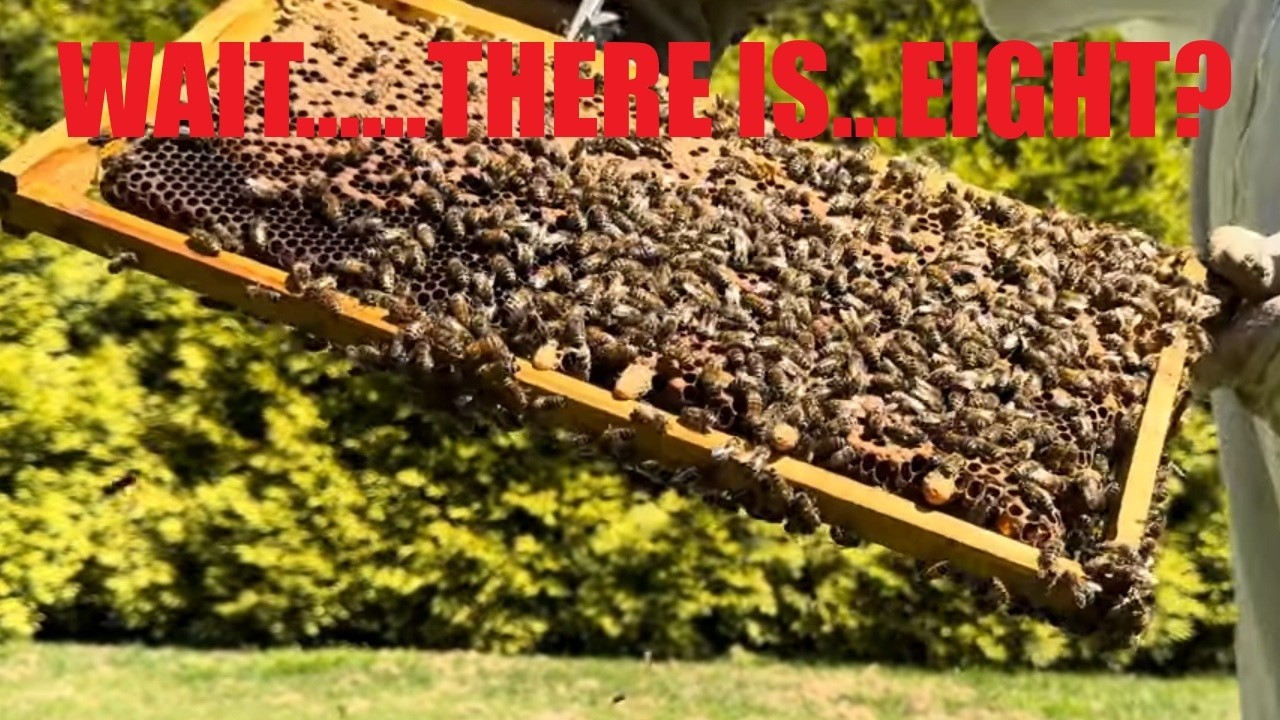
One of the clearest ways to confirm whether a hive is queenless is by introducing a brood frame containing very young eggs and larvae from another healthy colony.
The logic is simple:
- If the hive still has a functioning queen, the colony continues normally
- If the hive is queenless, the workers begin emergency queen rearing
This works because worker bees can only raise a new queen from extremely young larvae.
If no queen pheromone is present inside the hive, the colony recognises the emergency and immediately begins trying to replace her.
What Happened After the Brood Frame Was Added?
When the hive was inspected again, the answer became obvious almost immediately.
There were:
- No new eggs
- No fresh brood development
- No signs of a functioning laying queen
And then the real confirmation appeared.
Queen cells.
Not one or two.
Eight separate queen cells built directly onto the introduced brood frame.
This confirmed beyond doubt that the colony had become queenless and had entered emergency queen rearing mode.
What Does It Mean When Bees Build Multiple Queen Cells?
When bees suddenly build multiple queen cells after receiving fresh eggs, it means the colony is attempting to save itself by raising replacement queens.
The workers select suitable larvae and begin feeding them large amounts of royal jelly.
This changes the larva’s development pathway and produces a queen instead of a worker bee.
However, finding large numbers of queen cells creates a second management problem.
Multiple emerging queens can lead to:
- After swarms
- Reduced colony strength
- Loss of worker bees
- Unstable hive behaviour
What started as a recovery attempt can quickly become a swarm management situation.
Why Timing Becomes Critical
Queen development happens surprisingly quickly.
Once queen cells are capped:
- The emergence window approaches rapidly
- Hive behaviour can change quickly
- Swarm pressure increases
If multiple queens emerge close together, the colony may split repeatedly through after swarms.
That weakens the original hive significantly.
This is why regular inspections matter so much in backyard beekeeping.
Timing often determines whether a colony recovers strongly or declines further.
What Are the Management Options?
Once multiple queen cells are present, the beekeeper must decide how to proceed.
Common options include:
- Reducing the number of queen cells
- Allowing the colony to choose naturally
- Splitting the hive into nucleus colonies
- Creating additional hives from the available queens
Each approach carries different risks and advantages.
The best decision depends on:
- Season timing
- Colony strength
- Weather conditions
- Available equipment
- Beekeeping goals
Why Queenless Hives Become Aggressive
Many queenless colonies become noticeably louder and more defensive.
This happens because the colony loses the stabilising pheromones normally produced by a healthy queen.
Without those pheromones:
- Worker behaviour changes
- Organisation declines
- Defensive behaviour often increases
- Hive stability becomes weaker
Experienced beekeepers often recognise queenlessness from hive behaviour before visually confirming it.
Watch the Real Hive Inspection and Queen Cell Discovery
This inspection shows exactly what happened when the brood frame test confirmed the colony had become queenless and emergency queen cells began appearing throughout the hive.
Why This Is Valuable for Beginner Beekeepers
One of the hardest parts of beekeeping is recognising problems early enough to respond effectively.
Seeing real situations play out over time helps beginners understand:
- What queenless behaviour looks like
- How colonies respond
- How quickly conditions change
- Why inspections matter
Understanding how to make honey is really about understanding colony health, timing and environmental conditions working together.
The hive constantly communicates what is happening internally. Learning to recognise those signals is one of the biggest skills a beekeeper develops over time.
Frequently Asked Questions About Queenless Hives
How do you confirm a queenless hive?
One of the clearest methods is introducing a brood frame with fresh eggs. If the colony builds queen cells, the hive is queenless.
What are the signs of a queenless colony?
Common signs include no eggs, no brood, rising aggression, unsettled behaviour and emergency queen cell production.
Why do bees build emergency queen cells?
The colony builds emergency queen cells when workers detect the absence of a functioning queen.
What happens if too many queen cells emerge?
Multiple emerging queens can trigger after swarms and reduce the overall strength of the colony.
Can a queenless hive recover?
Yes. Colonies can recover by raising a new queen or by receiving a replacement queen from the beekeeper.
Why do queenless hives become aggressive?
Without queen pheromones stabilising the colony, worker behaviour often becomes louder, more defensive and less organised.
What is a brood frame test?
A brood frame test involves adding fresh eggs and larvae from another hive to see whether the colony attempts to raise a replacement queen.
Final Thoughts
Queenless hives are one of the clearest reminders that beekeeping is really about observation, timing and understanding systems rather than simply collecting honey.
Colonies can shift from stable to unstable very quickly, especially during active seasons when queen loss, swarming and environmental pressures combine together.
But situations like this also become some of the most valuable learning experiences for beginner beekeepers.
If you are interested in systems, resilience and long term improvement, you may also enjoy my self improvement and leadership podcast, where I explore practical ways to improve consistently over time.
You can also follow more real hive inspections and seasonal changes on my beekeeping YouTube channel.
More hive inspections and beginner beekeeping videos can be found on my channel.


Comments
Post a Comment