Does Hive Insulation Help Bees Survive Winter and Summer Heat?
Does Hive Insulation Help Bees Survive Winter and Summer Heat?
Hive insulation is one of those simple beekeeping changes that can make a much bigger difference than beginners often expect.
At first, it sounds like something only needed in winter.
But after losing hives, observing colonies through extreme temperature swings and learning through real inspections, one thing becomes clear.
Insulation is not just about warmth. It is about stability.
If you are starting to learn beekeeping, understanding how insulation supports hive survival and performance can help you make better decisions through every season.
Why Hive Insulation Makes Such a Difference
Bees are excellent at regulating the inside of the hive, but they still have to work against outside conditions.
When temperatures swing sharply between cold nights, warm days, winter chills and summer heat, that workload increases.
Insulation helps reduce those extremes.
That can support:
- Better winter survival
- Stronger spring build up
- More stable brood temperatures
- Less colony stress
- More consistent hive performance
The benefit is not always dramatic in one single moment. It builds over time.
Beekeeping Through Extreme Temperature Swings
Some locations create real challenges for bees.
Cold winter conditions above the snow line can be followed by hot summer days over 35°C.
That means colonies may need to handle:
- Cold nights
- Hot afternoons
- Rapid temperature changes
- Unstable seasonal conditions
Without support, bees use more energy trying to maintain the conditions they need inside the hive.
With insulation, that energy demand can be reduced.
How Insulation Helps in Winter
During winter, bees need to conserve heat and protect the cluster.
A poorly insulated hive can lose heat quickly, forcing the colony to work harder to stay alive.
Insulation helps slow heat loss and gives the bees a more stable internal environment.
This can be especially useful for:
- Smaller colonies
- Hives in exposed locations
- Cool climate beekeeping
- Colonies recovering from stress
In cold climate backyard beekeeping, insulation can be one of the simplest ways to reduce winter pressure.
Why Insulation Helps in Summer Too
One of the biggest surprises is that insulation can also help during hot weather.
It does not just trap warmth. It helps reduce temperature extremes.
In summer, insulation can help slow the transfer of outside heat into the hive.
That may help bees maintain steadier internal conditions with less effort.
The bees still need to cool the hive, but insulation can make that job easier.
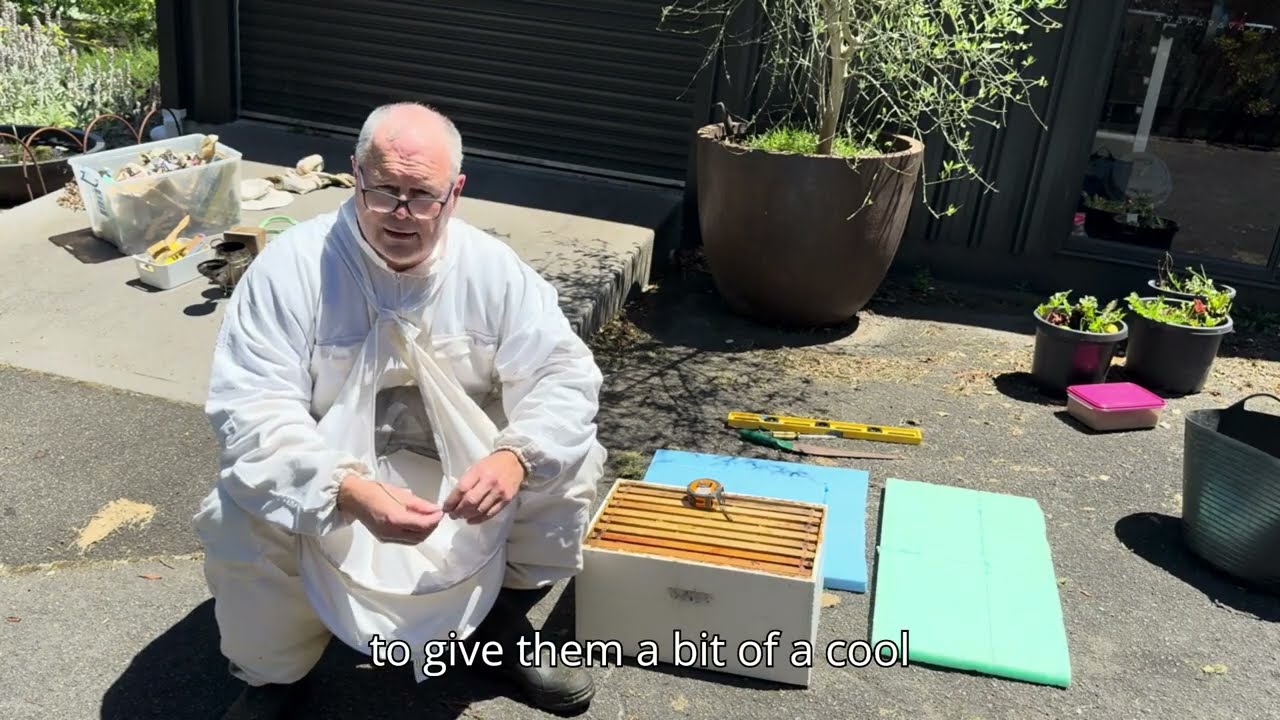
How to Make Simple Hive Insulation Panels
This approach is intentionally practical.
It does not require a complex build or expensive materials.
The basic process involves:
- Measuring the hive dimensions
- Cutting polystyrene panels to fit
- Fitting side panels snugly against the hive
- Adding front coverage where needed
- Keeping the panels secure and stable
The goal is to create a consistent thermal layer around the hive without making the setup harder to manage.
Small Details That Make Installation Easier
Polystyrene can break apart if it is handled roughly.
Taking time to cut it cleanly makes the setup easier, neater and more practical to use.
Simple steps help:
- Measure carefully before cutting
- Use clean cuts where possible
- Contain loose debris
- Fit panels securely
- Check they do not block entrances or airflow
Once fitted well, the panels require very little ongoing effort.
Do You Need a Full Outer Shell?
A full outer wooden shell can be used to house insulation, but it may not always be necessary.
In this setup, the insulation panels alone provided most of the useful benefit.
That is an important beekeeping lesson.
Simple solutions are often enough when they solve the actual problem.
More complicated is not always better.
Watch How I Insulate My Beehives
This video shows how simple hive insulation panels can be fitted to help improve colony stability, winter survival and year round performance.
What This Means for Backyard Beekeepers
If you have experienced winter losses, slow spring build up or stressed colonies during temperature swings, insulation is worth considering.
It can quietly improve several areas at once:
- Winter resilience
- Brood stability
- Spring recovery
- Summer temperature management
- General colony performance
Understanding how to make honey also means understanding how temperature, stress and hive stability affect colony strength.
Why Observation Matters Most
Beekeeping is always about observation and adaptation.
Over time, patterns begin to show.
If insulated hives consistently survive better, build faster and perform more predictably, that becomes useful information.
Good beekeeping is not about following one rule blindly.
It is about watching what works in your climate and adjusting accordingly.
Frequently Asked Questions About Hive Insulation
Does hive insulation help bees survive winter?
Yes. Insulation can reduce heat loss and help bees maintain more stable internal hive conditions during cold weather.
Can hive insulation help in summer?
Yes. Insulation can help reduce extreme temperature swings and slow heat transfer into the hive during hot weather.
What material can be used for hive insulation?
Polystyrene or EPS foam panels can be cut to fit around the hive as a simple insulation option.
Does insulation heat the hive?
No. Insulation does not create heat. It helps the hive retain warmth and reduce external temperature extremes.
Do all beehives need insulation?
Not always. Insulation is most useful in areas with cold winters, hot summers or large temperature swings.
Can insulation improve honey production?
It may help indirectly by reducing stress and supporting stronger colony performance, but nectar flow and colony strength still matter most.
Should insulation block hive ventilation?
No. Insulation should support temperature stability without blocking entrances, airflow or normal hive function.
Final Thoughts
Hive insulation is not just about helping bees get through winter.
It is about creating a more stable environment so the colony can use less energy fighting temperature extremes and more energy building strength.
For many backyard beekeepers, especially in cooler or variable climates, it can be one of the simplest changes with the biggest long term impact.
If you’re at the beginning and want to build a solid foundation before getting into things like insulation and seasonal management, this how to start beekeeping for beginners guide is a great place to begin.


Comments
Post a Comment