How to Spot Early Swarm Signs Before Your Hive Splits
How to Spot Early Swarm Signs Before Your Hive Splits
One of the biggest turning points in beekeeping is learning that strong healthy colonies are often the ones most likely to swarm.
At first, that sounds backwards.
A hive is thriving. Nectar flow is strong. Brood is expanding rapidly. Honey production is increasing.
But those same conditions also create pressure inside the colony.
If you are beginning to learn beekeeping, understanding early swarm signals becomes one of the most valuable skills you can develop.
Swarming rarely happens without warning. The hive almost always gives signs first.
Why Bees Swarm in the First Place
Swarming is a natural reproductive process for honey bee colonies.
When conditions become favourable:
- Population increases rapidly
- Nectar flow strengthens
- The queen lays heavily
- Space becomes limited
the colony may begin preparing to divide itself.
Part of the hive leaves with the old queen while a new queen emerges to continue the original colony.
From the bees’ perspective, swarming is normal colony expansion.
From the beekeeper’s perspective, it can mean losing a significant portion of the workforce right before peak honey production.
Why Strong Colonies Are Most at Risk
One of the easiest mistakes beginners make is assuming swarm risk only applies to neglected hives.
In reality, powerful colonies often swarm the fastest because conditions are ideal for expansion.
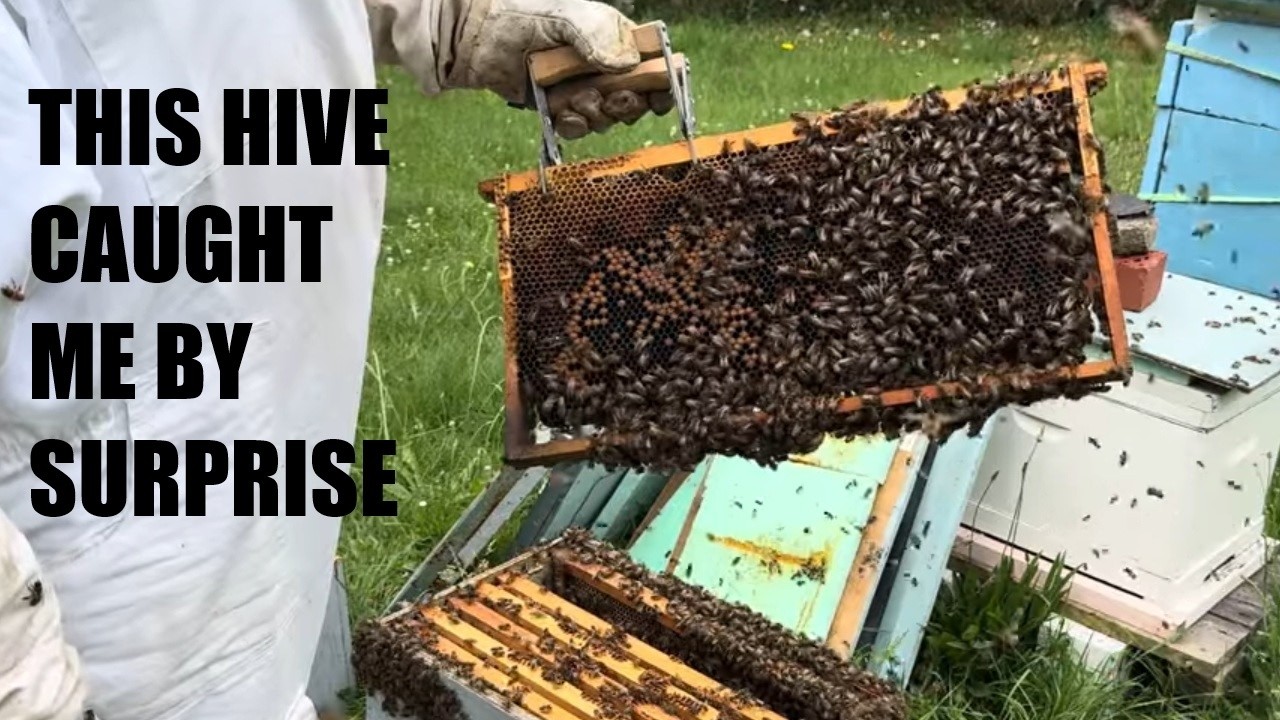
During this inspection, several major indicators appeared simultaneously:
- Heavy brood coverage
- Rapid nectar storage
- Increasing drone brood
- Queen cups forming
- Limited available space
Each sign alone may not trigger concern.
Together, they tell a very different story.
Why the Brood Box Reveals So Much
The brood box usually tells the real story about colony pressure.
During this inspection:
- Frames were packed with brood
- The queen was laying strongly
- Population growth was accelerating rapidly
Strong brood development is excellent for colony health.
But once worker populations begin expanding faster than available space, swarm preparation often follows.
This is why experienced backyard beekeeping focuses heavily on brood box congestion during spring and summer.
What Queen Cups and Queen Cells Mean
One of the most important parts of this inspection was finding queen cups and developing queen cell activity.
Queen cups are small downward facing structures built by workers.
At first, they may remain empty.
But once:
- An egg is laid
- Royal jelly is added
- Development begins
the colony has likely entered active swarm preparation.
At that point, the timeline changes dramatically.
Once queen cells progress far enough, swarming may happen very quickly.
Why Drone Brood Often Increases Before Swarming
Drone production often rises during swarm season because colonies are preparing for queen mating opportunities.
During this inspection, increasing drone brood added another important clue.
Drone development itself is normal.
But when combined with:
- Heavy brood pressure
- Queen cups
- Limited hive space
it strengthens the overall swarm picture significantly.
Why Space Management Matters So Much
One of the simplest and most effective swarm management tools is providing additional space before the hive becomes overcrowded.
In this situation, the next logical step was adding another super.
Additional space helps:
- Reduce congestion
- Delay swarm preparation
- Provide nectar storage room
- Keep the colony expanding productively
Timing matters enormously here.
Adding space too late often fails to stop swarm momentum once preparation has already accelerated.
Why Removing Queen Cells Only Buys Time
During the inspection, queen cells were removed to slow the process temporarily.
This is important to understand clearly:
Removing queen cells is usually not a permanent swarm solution by itself.
If:
- Population pressure remains high
- Congestion continues
- The colony still wants to swarm
new queen cells may simply appear again.
This is why swarm management is really about reducing overall pressure rather than only removing symptoms.
Why Insulation and Temperature Still Matter
Even during swarm season, colony temperature stability remains important.
After the inspection, insulation panels were mostly returned to the hive because stable brood temperatures still support colony health and development.
This becomes especially important in cooler climates where:
- Night temperatures drop significantly
- Brood warmth fluctuates
- Environmental conditions remain unpredictable
Good hive management is always a balance between:
- Ventilation
- Space
- Temperature stability
- Population pressure
Watch the Full Hive Inspection and Swarm Signs
This inspection shows the exact warning signs that appeared as the colony began showing early swarm preparation behaviour during a strong growth period.
Why Beginner Beekeepers Should Learn Swarm Signs Early
Swarm preparation is one of the clearest examples of why inspections matter so much.
Understanding how to make honey also means understanding colony pressure, brood expansion and seasonal timing.
The hive constantly communicates its intentions through:
- Brood patterns
- Hive congestion
- Queen cell development
- Behaviour changes
Learning to recognise those signals early gives you far more control over how you respond.
Frequently Asked Questions About Swarm Preparation
What are the early signs of swarming?
Common signs include queen cups, increasing drone brood, overcrowding, reduced brood space and rapid colony expansion.
Why do strong hives swarm?
Strong colonies often swarm because population growth and nectar flow create pressure inside the hive that encourages colony reproduction.
What do queen cups mean?
Queen cups are structures built by workers that may later develop into queen cells during swarm preparation or queen replacement.
Does removing queen cells stop swarming?
Not always. Removing queen cells may buy time temporarily, but swarm pressure can continue if overcrowding and congestion remain.
How does adding space help prevent swarming?
Additional hive space reduces congestion and gives bees more room for brood expansion and nectar storage.
Why does drone brood increase before swarming?
Colonies often raise more drones during swarm season because new queens will eventually need mating opportunities.
Can swarming happen suddenly?
Yes. Once queen cells become active, swarming can occur surprisingly quickly if conditions continue favouring colony division.
Final Thoughts
Swarming is not a sign of failure. It is a natural colony response to growth and environmental conditions.
The real skill in beekeeping comes from recognising the signals early enough to make calm and informed decisions before the situation accelerates.
Strong colonies require just as much observation as struggling ones, especially during active spring and summer periods when conditions can change rapidly.
If you are interested in systems, resilience and long term improvement, you may also enjoy my self improvement and leadership podcast, where I explore practical ways to improve consistently over time.
You can also follow more real hive inspections and seasonal changes on my beekeeping YouTube channel.
More hive inspections and beginner beekeeping videos can be found on my channel.


Comments
Post a Comment